

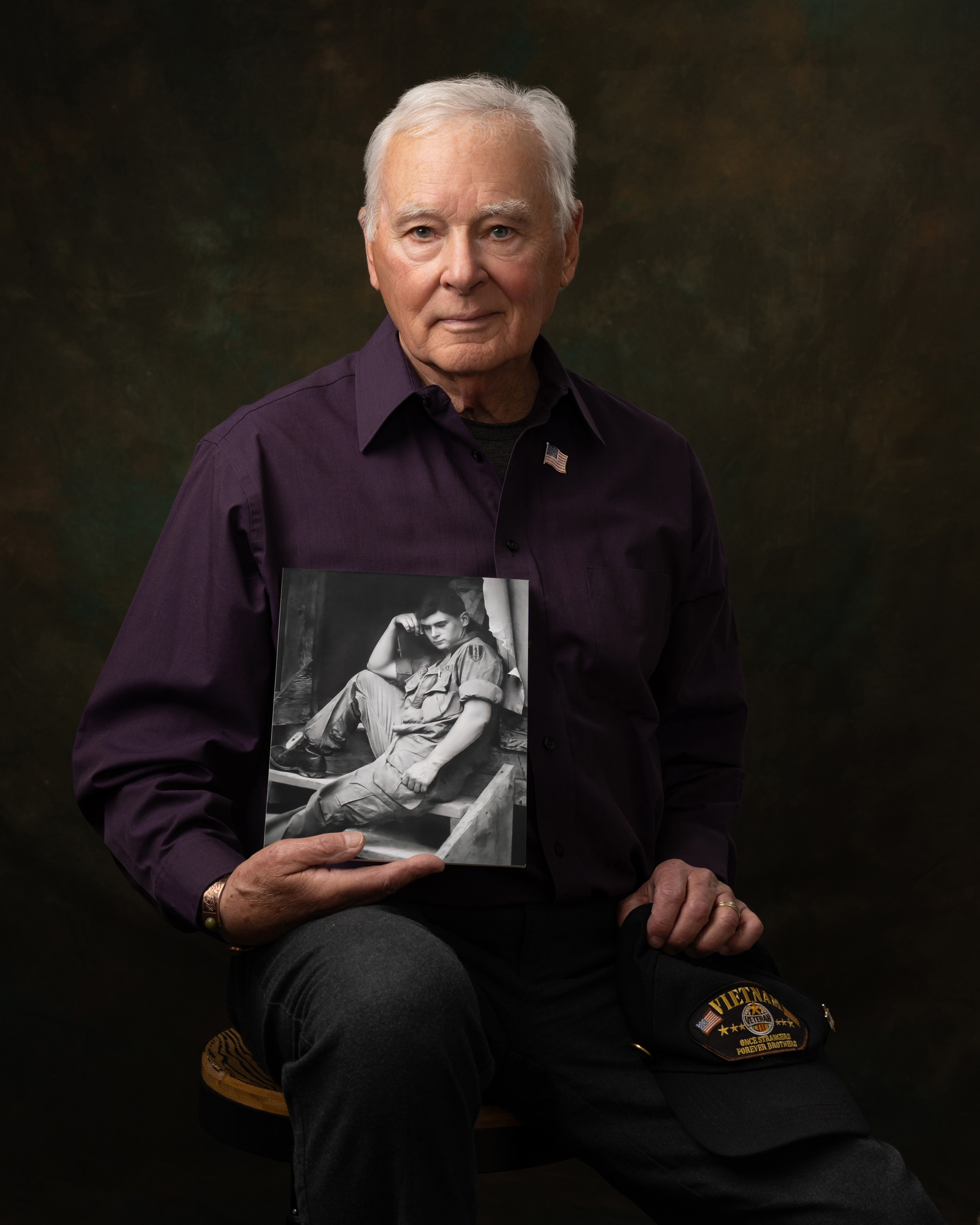
Bruce Roscoe
Vietnam War veteran Bruce Roscoe received his first camera, a Brownie Bullet, on his eighth birthday. Ten years later, he found himself behind a camera for much of his service in the U.S. Army as a combat photographer in Vietnam (1967–1968). But while photography would eventually become his life’s work, the experiences he documented during the war—and the personal toll they took—would remain largely unspoken for decades.
Not many people knew the Prescott Valley resident had served in Vietnam, much less had been a combat photographer. When he returned home, Roscoe rarely spoke about his experiences, even with family and friends.
“I was bitter when I came back. In my way of feeling, it kind of ruined a lot of my life. I went in naïve, came out—not naïve. I’m not sure how to phrase it,” he said. “It took my young youth away, my innocence, and replaced it with bitterness. I wasn’t the fun person I was before going in. I wasn’t. That wasn’t who I was anymore.”
Roscoe’s journey toward confronting his past took many years. “It took me a lot of years before I would wear anything on my hat to let people know I was in Vietnam,” he said. “This is the first year. That hat says ‘Once Strangers, Forever Brothers, Vietnam Veteran.’ It can’t be any truer than that.”
In 2013, a personal loss helped inspire a new purpose for his photography. Roscoe learned that his childhood friend, Joe Rowe, had terminal lung cancer caused by exposure to Agent Orange during his service in the U.S. Marine Corps in Vietnam. Now an award-winning professional portrait photographer, Roscoe offered to fly to Rhode Island to photograph his friend as a lasting gift to the Rowe family.
On his return flight, he began thinking about how he could use his photography skills to honor other veterans. He envisioned giving combat veterans a large, framed portrait in recognition of their service. That idea soon grew into something much bigger.
In 2014, Roscoe founded the nonprofit organization Vision of Vets, dedicated to honoring veterans and preserving their personal stories through portrait photography, video interviews, and written accounts. His mission is to ensure the experiences, heroism, and sacrifices of combat veterans are never forgotten and their stories are shared with future generations in a respectful and dignified manner.
In 2016, augmented reality became an important part of the Vision of Vets project. The technology transforms an image into a condensed 2.5 to 10-minute video, allowing viewers to watch and hear the veteran share personal experiences. This format is particularly effective in capturing the attention of younger audiences and introducing students to the experiences of those who served.
Roscoe believes he was the first to create this kind of “living portrait” of veterans. For him, the technology serves a purpose far greater than simply showcasing photography.
“We are losing World War II veterans at a high rate. I thought, if we can’t get their stories out, they will be lost forever,” Roscoe noted almost a decade ago. Today, the number of WWII survivors are miniscule, and Vietnam veteransare dying in increasing numbers.
Since its founding, Vision of Vets has documented the stories of veterans from multiple generations and branches of service. Those featured include World War II Navajo Code Talker Roy Hawthorne; World War II Navy prisoner of war Peter B. Marshall; Fran Ellis, a real-life Rosie the Riveter; Tech. Sgt. Jessie Keller of the U.S. Air Force and her K9 patrol partner, Chrash, who served in Iraq and Afghanistan; a U.S. Navy SEAL; a U.S. Army Green Beret; and Robert Brutinel, a World War II survivor of Iwo Jima. Several of these veterans have since passed away.
While Vision of Vets has given Roscoe a meaningful way to honor others, his own healing journey continues. In 2021, he and Ziggy, his service companion dog, began training together. Ziggy soon developed skills to help Roscoe manage symptoms associated with post-traumatic stress disorder (PTSD).
It was around the same time that Roscoe began seeking help and speaking more openly about his combat experiences in a safe, supportive environment with fellow veterans. Processing the effects of PTSD has been a difficult journey, not only for him but also for his family. His courage and willingness to share his story reflects the importance of connection, understanding, and support among those who have experienced combat.